



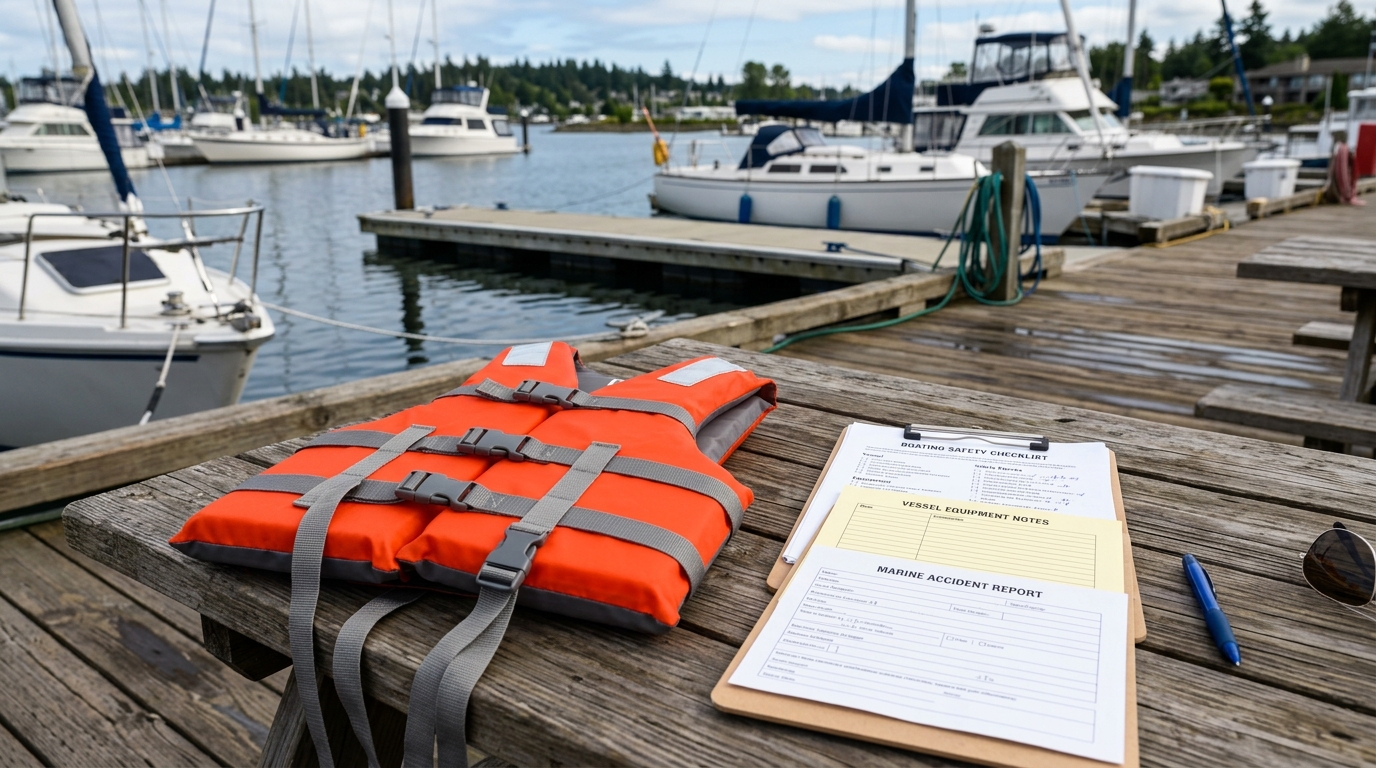
Evidence after a New York boating accident can disappear quickly because vessels may be repaired, water conditions change, witnesses leave the marina, GPS data may be deleted, and rental or surveillance records may be overwritten. A strong claim usually depends on connecting the accident, the responsible party, the injury, insurance coverage, and damages through organized proof. People reviewing their options after a watercraft injury may use a boating accident lawyer Long Island resource to understand how vessel evidence, reports, and medical records are generally evaluated.
Quick Answer
Important evidence after a New York boating accident may include the boating accident report, vessel operator information, owner information, registration records, photos, videos, passenger statements, witness contacts, GPS or chartplotter data, marina records, rental agreements, maintenance logs, weather records, safety equipment photos, medical records, insurance documents, and proof of lost income. The most useful evidence helps show how the accident happened, who controlled the vessel, whether safety rules were followed, and how the injury affected the person’s life.
Key Takeaways
- Boating accident evidence should be preserved quickly because boats, docks, weather, wake patterns, and digital data can change fast.
- New York boating accident reporting rules may require a written report within five days after qualifying vessel accidents involving injury, death, disappearance, or property damage over the statutory threshold.
- Operator conduct, vessel ownership, rental records, maintenance records, and safety equipment can all affect liability.
- The U.S. Coast Guard’s 2024 recreational boating statistics list operator inattention, improper lookout, operator inexperience, machinery failure, navigation rules violations, excessive speed, alcohol use, weather, hazardous waters, and force of wave or wake among leading known contributing factors in incidents.
- Medical records help connect the boating accident to injury, treatment, disability, and damages.
- Public docks, public launches, public vessels, or municipal marinas may involve shorter notice requirements.
- A clear evidence timeline can help respond to insurance disputes and blame arguments.
Why Evidence Matters in Boating Accident Claims
Boating accident claims can be harder to prove than ordinary roadway claims because the accident scene may not preserve itself. There may be no lane markings, traffic lights, skid marks, or nearby surveillance cameras. A collision may happen on open water. A wake injury may leave no physical trace. A passenger may be injured during docking, boarding, or sudden vessel movement.
Evidence helps answer key questions:
- Who operated the boat?
- Who owned the vessel?
- Was the vessel rented, borrowed, or commercially operated?
- Was the operator speeding, impaired, distracted, or inexperienced?
- Did another vessel contribute?
- Was the boat properly maintained?
- Were safety devices available and accessible?
- Were passengers warned?
- Was weather or wake involved?
- Was a public dock, marina, or government-controlled area involved?
- What injuries were caused by the accident?
The claim usually becomes stronger when evidence from multiple sources points to the same timeline.
Boating Accident Reports
A boating accident report is often one of the most important records. New York Navigation Law § 47-B requires a written report within five days after certain vessel accidents involving death, injury, disappearance under the water, or property damage above the statutory threshold. New York State Parks also states that boating accidents must be reported within five days when the accident results in injury requiring medical care beyond first aid, death or disappearance, or damage to any one party over $1,000.
A boating accident report may document:
- Date and time
- Waterway or marina location
- Vessel operator
- Vessel owner
- Vessel registration
- Passenger information
- Injury details
- Property damage
- Weather and water conditions
- Witnesses
- Law enforcement involvement
- Emergency response details
The report may not include every important fact. It should be treated as a starting point, not the entire claim.
Operator Information
The vessel operator’s identity is critical because operator conduct is often central to liability. New York Navigation Law § 45 requires vessel operators to navigate carefully and prudently, prohibits reckless operation, and limits operation at speeds greater than reasonable and prudent under existing conditions and hazards.
Operator evidence may include:
- Operator name and contact information
- Boating safety certificate information, when relevant
- Operator age
- Experience level
- Alcohol or drug evidence
- Phone use or distraction evidence
- Statements made after the accident
- Law enforcement observations
- Passenger accounts
- Prior safety instruction records
Operator conduct may be especially important when the accident involved speed, poor lookout, unsafe wake, collision, sudden turns, passenger ejection, or impaired operation.
Vessel Owner Information
The operator may not be the owner. The boat may belong to a friend, family member, rental company, marina, boat club, business, or private owner. New York Navigation Law § 48 addresses vessel owner liability when death, personal injury, or property damage results from negligent vessel operation by a person operating with the owner’s express or implied permission.
Owner-related evidence may include:
- Vessel registration
- Title or ownership records
- Marina slip records
- Insurance documents
- Permission evidence
- Text messages or emails
- Rental or charter agreements
- Maintenance records
- Safety equipment records
- Prior complaints about the vessel
Ownership evidence can affect liability, insurance coverage, and whether more than one responsible party should be reviewed.
Photos and Videos From the Scene
Photos and videos should be taken as soon as it is safe. The scene may look different after the boat is moved, weather changes, damaged equipment is removed, or a dock is cleaned or repaired.
Helpful photos and videos may include:
- All vessels involved
- Vessel damage
- Dock, marina, ramp, or slip conditions
- Life jackets and safety equipment
- Navigation lights
- Engine cut-off switch or lanyard
- Broken ladders, ropes, railings, seats, or cleats
- Fuel spills or electrical hazards
- Waterway markers
- No-wake signs
- Weather and visibility conditions
- Injuries, when appropriate
- Damaged clothing or personal items
Close-up photos show detail. Wide-angle photos show context. Both are useful.
Passenger Statements
Passenger statements can be powerful evidence because passengers may know what happened before the accident. They may have heard warnings, seen drinking, noticed speed, observed sudden turns, or watched the operator ignore weather or wake.
Passenger statements may address:
- How fast the boat was moving
- Whether the operator was distracted
- Whether alcohol was present
- Whether safety instructions were given
- Where passengers were seated
- Whether life jackets were available
- Whether the operator warned passengers before turning
- Whether another vessel created wake
- Whether the operator reacted properly
- What happened immediately after the injury
Passenger memories should be documented early before details fade.
Witness Information
Neutral witnesses can help when the operator, owner, rental company, or insurer disputes what happened. Witnesses may include nearby boaters, marina workers, dock staff, passengers on other boats, swimmers, anglers, restaurant employees, or shoreline observers.
Useful witness information includes:
- Name
- Phone number
- Email address
- Where the witness was located
- What the witness saw
- Whether they took photos or video
- Whether they saw unsafe speed, wake, alcohol, collision, or equipment failure
Witnesses may leave the area quickly, especially after weekend or vacation boating incidents. Early collection is important.
GPS, Chartplotter, and Phone Data
Digital evidence can help reconstruct the accident. It may show route, location, speed, timing, direction of travel, or where the vessel stopped.
Useful digital evidence may include:
- GPS tracks
- Chartplotter data
- Phone location history
- Fitness or location apps
- Photos with timestamps
- Videos
- Text messages
- Emergency call records
- Rental tracking data
- Marina access logs
- Dash-style boat camera footage
- Action camera footage
This information can be lost if devices are reset, vessels are repaired, rental equipment is reused, or footage is overwritten.
Weather, Wake, and Water Condition Evidence
Weather and water conditions often become liability issues. One side may argue that sudden weather caused the accident. Another may argue that the operator failed to slow down, ignored poor visibility, or operated too close to docks or other vessels.
Relevant evidence may include:
- Weather reports
- Marine forecasts
- Wind and visibility data
- Tide or current information
- Photos of water conditions
- No-wake signage
- Witness statements about waves or wake
- GPS speed data
- Marina warnings
- Phone screenshots from weather apps
Wake injuries can be difficult to prove because wake disappears quickly. Witness statements, GPS records, passenger accounts, and nearby vessel information may be especially important.
Rental Boat and Jet Ski Records
Rental accidents may involve motorboats, pontoons, Jet Skis, personal watercraft, kayaks, canoes, or paddleboards. Rental records can show who rented the vessel, who was authorized to operate it, what instructions were given, and whether the rental company followed its own procedures.
Rental evidence may include:
- Rental agreement
- Safety instruction checklist
- Operator age and identification records
- Personal watercraft instruction records
- Vessel inspection forms
- Maintenance logs
- Life jacket records
- Employee statements
- Operating boundary maps
- Weather restriction notices
- GPS or tracking records
- Incident reports
- Insurance documents
A rental company is not automatically liable for every accident, but poor instruction, unsafe equipment, missing safety gear, or incomplete records may raise important questions.
Marina, Dock, and Property Records
Some boating injuries happen at marinas, docks, boat launches, fuel docks, slips, ramps, or public waterfront areas. In those cases, property records may matter as much as vessel records.
Potential marina and dock evidence includes:
- Incident reports
- Maintenance logs
- Inspection records
- Repair records
- Surveillance footage
- Dock assignment records
- Slip rental records
- Fuel dock records
- Cleaning records
- Lighting records
- Prior complaints
- Employee statements
- Photos of unsafe conditions
- Weather or tide information
A premises liability attorney resource may help explain how property control, notice, inspection practices, and maintenance records can overlap with dock and marina injury claims.
Maintenance and Repair Records
Mechanical failure can contribute to serious boating accidents. A vessel may lose steering, fail to accelerate or slow properly, have broken navigation lights, suffer engine problems, or take on water because of poor maintenance.
Important maintenance evidence may include:
- Service records
- Repair invoices
- Inspection forms
- Prior mechanical complaints
- Marina service records
- Parts replacement records
- Warranty documents
- Photos of damaged parts
- Expert inspection findings
- Records of prior similar failures
If mechanical failure is suspected, the vessel and failed parts should be preserved before repair. Repairing or replacing parts too quickly can make the claim harder to prove.
Safety Equipment Evidence
Safety equipment can affect both liability and injury severity. New York State Parks states that boaters are required to have one life jacket for each person aboard and that life jackets must be U.S. Coast Guard-approved, readily accessible, in good condition, and properly sized.
Safety equipment evidence may include:
- Life jacket photos
- Life jacket size and condition
- Throwable flotation device evidence
- Sound-producing device
- Fire extinguisher records
- Navigation lights
- Engine cut-off switch
- Safety lanyard
- Emergency signaling equipment
- Ladder or reboarding device
- Passenger safety instructions
Missing, damaged, inaccessible, or improperly sized safety equipment may affect how the accident and injuries are evaluated.
Alcohol or Drug Evidence
Alcohol and drug evidence may be important when impaired boating is suspected. New York Navigation Law § 49-A addresses vessel operation while under the influence of alcohol or drugs. The U.S. Coast Guard’s 2024 recreational boating statistics reported alcohol use as a contributing factor in 244 incidents, 92 deaths, and 192 injuries.
Alcohol-related evidence may include:
- Police or marine patrol reports
- Chemical test results
- Witness statements
- Passenger observations
- Photos or videos
- Open container evidence
- Bar, restaurant, or marina receipts
- Operator admissions
- Social media posts
- Timeline of drinking
- Emergency responder observations
Alcohol evidence is most useful when it helps connect impairment to unsafe operation, delayed reaction, poor lookout, excessive speed, or failure to respond after the accident.
Medical Records
Medical records help prove that the boating accident caused injury and show the seriousness of the harm. They can document symptoms, diagnosis, treatment, surgery, therapy, disability, and future care needs.
Important medical records may include:
- Emergency medical services records
- Emergency room records
- Hospital records
- Imaging reports
- Specialist notes
- Surgery records
- Physical therapy records
- Pain management records
- Prescription receipts
- Work restriction notes
- Medical bills
- Future care recommendations
For broader documentation planning, readers may review how evidence for personal injury claims can help connect the incident, injury, responsible party, and damages.
Insurance Documents
Insurance coverage can be complicated after a boating accident. Coverage may depend on vessel ownership, operator permission, rental agreements, marina policies, homeowner’s policies, umbrella coverage, commercial use, alcohol exclusions, or public entity involvement.
Helpful insurance documents may include:
- Boat insurance policy information
- Vessel owner insurance
- Rental company insurance
- Marina liability insurance
- Homeowner’s insurance
- Umbrella policy information
- Claim numbers
- Adjuster letters
- Denial letters
- Reservation of rights letters
- Settlement offers
- Medical payment records
Insurance letters should be saved because they may reveal coverage positions, claim deadlines, exclusions, or disputes about responsibility.
Lost Income and Daily Impact Evidence
A boating accident claim may involve more than medical bills. Serious injuries can affect work, household activity, recreation, transportation, caregiving, sleep, and daily movement.
Helpful damages evidence may include:
- Pay stubs
- Tax records
- Employer letters
- Work restriction notes
- Missed work calendar
- Business income records
- Receipts for out-of-pocket costs
- Transportation expenses
- Home assistance costs
- Notes about daily limitations
- Photos of recovery equipment
- Therapy attendance records
Publicly available personal injury case results may provide general context, although every boating accident claim depends on its own injuries, evidence, insurance coverage, and applicable law.
Evidence Involving Public Docks or Public Entities
If a boating accident involves a public dock, municipal marina, state park, public launch, public vessel, public authority, or government-controlled waterfront area, special notice rules may apply. New York General Municipal Law § 50-E generally requires a notice of claim within 90 days when notice is required for certain tort claims against public corporations.
Public entity evidence may include:
- Exact location
- Public agency name
- Facility ownership records
- Incident reports
- Maintenance records
- Prior complaints
- Photos of signs or public facility markings
- Employee names
- Surveillance footage
- Weather and lighting evidence
The exact location should be documented early because public entity deadlines may arrive much sooner than ordinary lawsuit deadlines.
Deadlines and Evidence Preservation
Deadlines depend on the claim type and responsible parties. The New York Courts statute of limitations timetable lists three years for many negligence-based personal injury claims, two years for wrongful death claims, and three years for product liability matters.
However, practical evidence deadlines may arrive much earlier. Surveillance footage may be overwritten. GPS data may be deleted. Vessels may be repaired. Rental records may be archived. Witnesses may become difficult to locate. Public entity notice rules and accident reporting rules may also create urgency.
Common Mistakes That Can Weaken Boating Accident Evidence
Some mistakes can make a boating accident claim harder to prove.
Common mistakes include:
- Not reporting a qualifying boating accident
- Not getting medical care promptly
- Not identifying the operator and vessel owner
- Not collecting witness and passenger information
- Not photographing vessel damage
- Not preserving GPS or phone data
- Allowing the boat to be repaired before inspection
- Not saving rental or marina records
- Throwing away damaged clothing or safety equipment
- Not documenting weather or wake conditions
- Not requesting surveillance footage early
- Speaking casually with insurance adjusters
- Accepting a quick settlement before injuries are fully known
- Missing public entity notice deadlines
Evidence preservation should begin as soon as safety and medical needs are addressed.
When Legal Guidance May Be Useful
Legal guidance may be useful when a boating accident causes serious injury, involves multiple vessels, includes a rental boat or Jet Ski, raises alcohol concerns, involves unsafe dock conditions, requires vessel inspection, or involves unclear insurance coverage.
A boating accident claim may require review of accident reports, vessel ownership, operator conduct, GPS data, passenger statements, rental agreements, marina records, maintenance logs, safety equipment, medical records, insurance coverage, public entity rules, and deadlines.
People researching local support may review a Farmingdale legal office location when looking for Long Island boating accident claim information. A broader boat accident attorney guide may also help readers understand why watercraft claims often require both vessel evidence and ordinary injury-claim documentation.
FAQs About Boating Accident Evidence
What evidence should be saved after a boating accident?
Important evidence may include the boating accident report, photos, videos, witness statements, passenger accounts, operator and owner information, vessel registration, rental records, GPS data, weather records, maintenance logs, medical records, insurance letters, and safety equipment evidence.
Why are photos important after a boating accident?
Photos help document vessel damage, dock conditions, safety equipment, weather, waterway layout, injuries, and visible hazards before anything changes. Both close-up and wide-angle photos can help explain what happened and where it happened.
Does a boating accident have to be reported in New York?
A written report may be required within five days after a qualifying boating accident involving death, injury, disappearance under the water, or property damage above the statutory threshold. Reporting can create an important official record.
What if the boat was repaired before inspection?
Repairs can make the claim harder to investigate when mechanical failure, maintenance problems, collision damage, or defective equipment is disputed. Repair invoices, photos, damaged parts, maintenance records, and expert review may still be useful.
What evidence matters in a rental boat accident?
Rental boat evidence may include the rental agreement, safety instruction checklist, age and identification records, vessel inspection forms, maintenance logs, employee statements, operating boundary instructions, GPS records, insurance documents, and accident reports.
Final Thoughts
Evidence can decide how a New York boating accident claim is evaluated. The strongest claims usually include a clear boating accident report, operator and owner information, vessel records, photos, passenger statements, witness contacts, GPS data, weather records, safety equipment evidence, medical records, insurance documents, and proof of damages. Because water conditions, vessels, rental records, and digital data can change quickly, early preservation is often one of the most important steps after a boating accident.
Image Suggestion Table
| Image Type | Image Idea | Placement Suggestion | Image ALT Text | NanoBanana Ready Prompt |
| Featured Image | Boating accident evidence documents and vessel records | Top of article before intro | New York boating accident evidence documents and vessel records | Create a realistic editorial-style 16:9 image of boating accident evidence documents, vessel registration papers, accident report forms, medical records, GPS notes, and a pen arranged on a clean legal desk, professional lighting, no readable private information, no visible injuries, no brand names, no logos |
| Supporting Image 1 | Photos, witness statements, and accident report evidence | After “Photos and Videos From the Scene” section | Boating accident photos and witness statement evidence | Create a realistic 16:9 image of printed boating accident scene photos, witness statement forms, boating accident report papers, and evidence checklist arranged neatly on a professional desk, no readable private information, no visible injuries, no brand names, no logos |
| Supporting Image 2 | GPS, weather, and water condition records | After “Weather, Wake, and Water Condition Evidence” section | GPS and weather records for a New York boating accident claim | Create a realistic editorial-style 16:9 image of generic GPS route notes, weather records, marine condition notes, and boating claim documents arranged on a clean desk, no readable private information, no brand names, no logos |
| Supporting Image 3 | Rental boat and safety equipment records | After “Rental Boat and Jet Ski Records” section | Rental boat safety equipment and evidence records | Create a realistic 16:9 image of generic rental boat paperwork, safety instruction checklist, plain life jacket, vessel inspection forms, and insurance documents arranged on a dockside table, no readable private information, no brand names, no logos |
Source Verification Notes
The article references official New York boating and legal sources. New York Navigation Law § 47-B and New York State Parks boating guidance address written reporting after qualifying boating accidents. New York Navigation Law § 45 addresses careful and prudent vessel operation, reckless operation, and reasonable speed. New York Navigation Law § 48 addresses owner liability when negligent vessel operation occurs with express or implied permission. New York Navigation Law § 49-A addresses vessel operation while impaired by alcohol or drugs. U.S. Coast Guard 2024 recreational boating statistics identify leading contributing factors in recreational boating incidents. New York Courts lists time limits for many personal injury, wrongful death, and product liability matters, and New York General Municipal Law § 50-E addresses notice of claim requirements for certain tort claims against public corporations.

